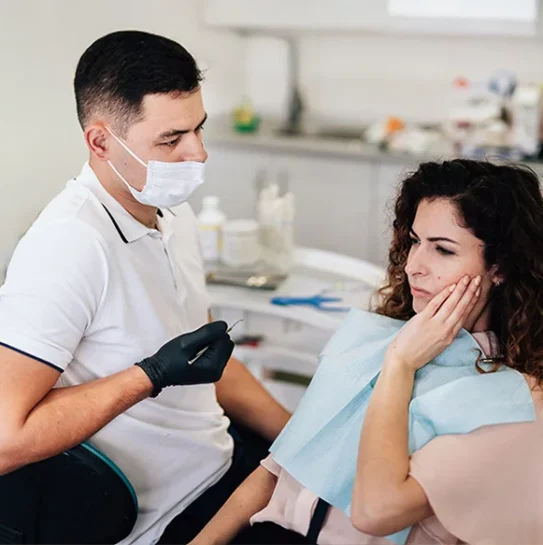
TMJ Treatments in Sacramento, CA
TMJ, also called the temporomandibular joint, is the hinge-like joint that links your jawbone to your skull. When the joint does not function properly, a range of symptoms may develop that affect comfort and jaw movement. Individuals with TMJ disorders may experience jaw discomfort, joint noises during movement, headaches, ear-related symptoms, or restricted jaw motion.
Evaluating TMJ concerns usually involves reviewing symptoms, examining jaw function, and assessing factors that may contribute to joint discomfort. During your visit with a trusted dentist in Sacramento, our team will review your medical history, evaluate jaw movement, and examine the surrounding muscles and joints. Additional diagnostic tests, including X-rays or MRIs, may be recommended when necessary to obtain a clearer understanding of the joint’s condition. The information gathered during the evaluation helps guide treatment recommendations based on your specific findings.
Common Signs And Causes Of TMJ Disorders
Several factors may contribute to TMJ disorders, and symptoms may vary in severity from one person to another. Common signs include jaw pain, facial soreness, jaw clicking or popping, headaches, ear discomfort, jaw stiffness, and difficulty chewing certain foods. Some individuals report jaw fatigue during prolonged speaking, chewing, or yawning. Factors such as teeth grinding, jaw clenching, bite imbalances, joint injury, arthritis, and muscle tension may contribute to TMJ-related concerns. Since similar symptoms may be associated with different conditions, a professional evaluation is important for an accurate diagnosis.
When To Seek Professional Evaluation
Temporary jaw discomfort may improve without treatment, but persistent symptoms should be evaluated. Difficulty opening or closing the mouth, recurring headaches, ongoing jaw pain, or changes in bite alignment may indicate that additional assessment is needed. Individuals seeking TMJ treatment near you often benefit from an examination that identifies the underlying cause of their concerns before treatment recommendations are made.
Common TMJ Treatments and Their Effectiveness
At Jeff L. DiMariano, DDS, we provide several treatment options designed to address TMJ-related symptoms and jaw dysfunction. One common approach involves oral appliances such as splints or mouthguards, which may help reduce teeth grinding and clenching, two factors commonly associated with TMJ disorders. These appliances are fabricated to fit the individual’s bite and may help reduce pressure on the jaw joint.
In some situations, additional therapy may be recommended, including orthodontic adjustments to address bite irregularities or restorative procedures to repair damaged teeth. TMJ surgery in Sacramento, including procedures such as arthrocentesis or arthroscopy, may be considered in severe cases. These minimally invasive procedures may help reduce symptoms in appropriately selected situations.
Alternative and Complementary Therapies for TMJ Relief
In addition to conventional therapies, some individuals explore complementary approaches as part of a broader TMJ management plan. Treatment recommendations may include physical therapy exercises, relaxation techniques, or stress-management strategies when appropriate. Some individuals choose to incorporate complementary approaches such as acupuncture or chiropractic care alongside professional treatment recommendations.
How TMJ Therapy Supports Jaw Function
TMJ treatment plans are carefully designed to address the factors contributing to joint discomfort and muscle strain. Depending on the diagnosis, therapy may focus on reducing pressure on the jaw joint, improving jaw movement, managing muscle tension, or addressing habits that contribute to symptoms. Recommendations for TMJ therapy in Sacramento vary depending on symptom severity, jaw function, and contributing factors identified during evaluation.
Everyday Activities Affected By TMJ Disorders
The temporomandibular joint plays an important part in daily activities such as speaking, chewing, yawning, and swallowing. When the joint becomes irritated or dysfunctional, these routine activities may become uncomfortable. Some individuals modify their eating habits or avoid certain foods because of jaw discomfort. Early management may help reduce discomfort during routine activities.
Tips for Controlling and Managing TMJ Symptoms at Home
While professional treatment is important, there are steps you can take at home to help manage TMJ-related concerns. These include:
Diet modification: Avoid hard, chewy, or sticky foods that may place additional strain on the jaw.
Relaxation techniques: Practice stress-reduction methods such as deep breathing and meditation to help relax facial muscles.
Heat and cold therapy: Applying heat or cold packs to the impacted area may help reduce soreness and inflammation.
Gentle jaw exercises: Certain exercises may help support jaw mobility and reduce stiffness.
Good posture: Maintaining proper posture may reduce strain affecting the neck and jaw.
Why Patients Choose Jeff L. DiMariano, DDS
Understanding the source of jaw discomfort can help individuals make informed decisions regarding treatment options. At Jeff L. DiMariano, DDS, TMJ evaluations focus on understanding individual symptoms and identifying contributing factors before recommendations are made. Individuals from nearby communities such as Arden Fair, Midtown, Arden-Arcade, Cal Expo, and Bushy Lake often schedule evaluations when jaw symptoms begin interfering with daily activities.
Frequently Asked Questions
Yes. TMJ disorders may contribute to muscle tension and discomfort that can be associated with headaches in some individuals.
Jaw clicking may occur when the joint disc moves differently during jaw movement or when structures within the joint do not move smoothly.
For some individuals, custom oral appliances may help reduce the effects of clenching or grinding that contribute to TMJ-related discomfort.
Treatment outcomes vary depending on the underlying reason behind the condition, the severity of symptoms, and individual factors affecting the jaw joint and surrounding muscles.
TMJ disorder refers to problems with the jaw joint and surrounding muscles, often caused by teeth grinding, jaw clenching, stress, or misalignment of the bite. It can lead to pain, clicking sounds, or difficulty opening your mouth fully. I evaluate the underlying cause before recommending treatment, since it varies quite a bit from patient to patient.
Common symptoms include jaw pain or tenderness, clicking or popping sounds when opening your mouth, headaches, and a jaw that feels stuck or locked at times. Some patients also notice ear pain or facial discomfort. If any of this sounds familiar, it's worth having me take a closer look.
Yes, TMJ disorder is a fairly common, often overlooked cause of recurring headaches, particularly around the temples or behind the eyes, since the jaw muscles connect closely to that area. Patients are sometimes surprised to learn their headaches are dental in origin. Treating the underlying jaw issue often brings real relief.
I evaluate your jaw movement, listen for clicking or popping, check your bite alignment, and ask about symptoms like headaches or facial pain. In some cases, imaging may be needed to get a clearer picture of the joint itself. A thorough exam usually points us toward the right treatment approach.
Treatment can range from a custom nightguard to reduce clenching, to physical therapy exercises, to Botox injections that relax the jaw muscles in more persistent cases. I tailor the approach to the severity and underlying cause of your symptoms. Many patients see meaningful improvement with conservative treatment alone.
A custom nightguard can significantly reduce the impact of grinding and clenching during sleep, which is one of the most common contributors to TMJ pain. It cushions your teeth and helps relax the jaw muscles overnight. I find this to be one of the most effective starting points for many patients.
Mild cases sometimes improve with simple changes like stress management or avoiding hard, chewy foods, but more persistent symptoms usually need some form of treatment to fully resolve. Ignoring ongoing pain can allow the underlying issue to worsen over time. I'd rather evaluate it early than have you live with discomfort longer than necessary.
Absolutely — stress is one of the most common triggers for jaw clenching and teeth grinding, both of which directly aggravate TMJ symptoms. Addressing stress alongside dental treatment often improves results. I'll talk through both the physical and lifestyle factors that might be contributing to your symptoms.
Coverage for TMJ treatment varies quite a bit by insurance plan and by which specific treatment is recommended, like a nightguard versus Botox injections. My team will check your benefits and walk you through what's covered before we begin. We're also happy to discuss payment options for anything not covered.
If jaw pain, clicking, or headaches are recurring or affecting your daily life, like eating or talking comfortably, it's worth getting evaluated rather than waiting it out. As your Sacramento, CA dentist, I can usually identify the cause fairly quickly with a focused exam. Earlier treatment tends to mean a simpler, less invasive path to relief.
Contact Us Today!
TMJ disorders can affect jaw movement, eating, speaking, and overall comfort. If you are experiencing persistent symptoms, scheduling an evaluation can help identify contributing factors and determine appropriate treatment options.
Contact Jeff L. DiMariano, DDS, to learn more about available TMJ therapies and whether an evaluation may be beneficial for your situation.