Dental Implants in Sacramento, CA
Dental implants are restorations which are used to replace missing teeth and provide support for long-term oral function. At Jeff L. DiMariano, DDS, implant treatment may be recommended for individuals who have lost teeth due to decay, injury, periodontal concerns, or other dental conditions. Implant-supported restorations are designed to replace missing tooth structures while helping maintain stability within the dental arch.
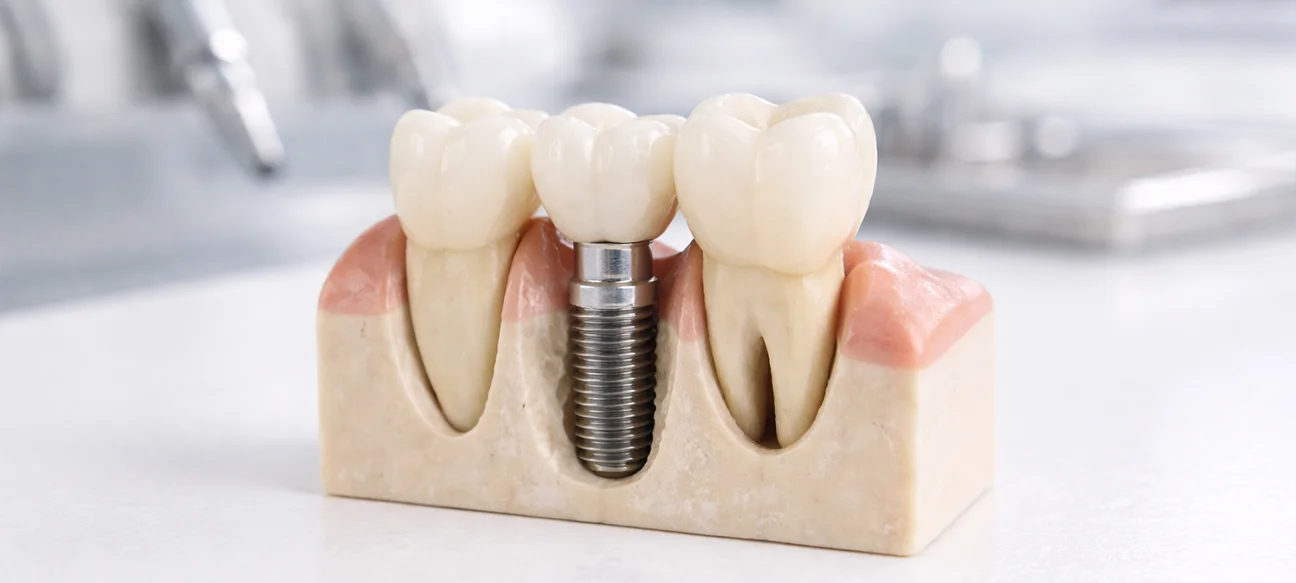
A dental implant system contains three primary components: the implant post, abutment, and the restoration placed above the gumline. The implant post is positioned within the jawbone and acts as the foundation for the replacement tooth. After healing takes place, an abutment is attached to connect the implant to a custom restoration. The final crown is fabricated to complement the surrounding teeth in size, shape, and appearance.
Benefits of Dental Implants
Dental implants are frequently selected as a long-term tooth replacement option because they function independently and do not depend on neighboring teeth for support. Unlike certain traditional replacement methods, implant-supported restorations are anchored directly within the jawbone and provide support for replacement teeth.
One advantage of implant treatment is that it allows replacement teeth to remain fixed in position during normal daily activities. At a trusted dentist in Sacramento, implant-supported restorations may also help maintain the spacing of surrounding teeth while supporting chewing performance and bite stability. Long-term outcomes depend on oral hygiene habits, regular dental care, overall health factors, and ongoing maintenance.
Because implants are placed within the jawbone, they may also help support the underlying structures that remain following tooth loss. Implant restorations are designed to resemble natural teeth while replacing missing areas within the mouth.
Who May Be A Right Candidate For Dental Implants
Dental implants may be considered for individuals missing one tooth, several teeth, or the whole arch of teeth. Determining candidacy requires a comprehensive examination that evaluates gum health, bone support, medical history, and overall oral conditions.
Many individuals researching dental implants near you are interested in understanding whether implants can be used to replace multiple missing teeth or support more extensive restorations. Treatment recommendations vary according to the amount of available bone, the location of missing teeth, healing considerations, and individual restorative goals. In some cases, additional procedures may be discussed before implant placement is considered.
Dental Implants And Long-Term Tooth Replacement
Tooth loss may affect chewing efficiency, bite balance, speech patterns, and the distribution of forces throughout the mouth. Replacing missing teeth can help address these concerns while supporting overall oral function.
Properly planned dental implants in Sacramento may be used to replace individual teeth, support bridge restorations, or anchor full-arch prostheses. Because implants are integrated within the jawbone, they serve as stable anchors for various restorative options. The most appropriate treatment approach depends on clinical findings, restorative requirements, and long-term maintenance considerations.
Types of Dental Implants
Several implant designs may be used depending on oral health conditions and treatment objectives.
Endosteal Implants: Endosteal implants are positioned directly within the jawbone and represent the most commonly used implant design.
Subperiosteal Implants: These implants are settled above the jawbone and beneath the gum tissue. They may be considered in specific situations involving limited bone support.
Mini Dental Implants: Mini implants have a smaller diameter than conventional implants and may be considered when space limitations or anatomical factors exist.
All-on-4 Implant Treatment: This treatment concept uses strategically positioned implants to support a full-arch restoration. It may be considered when extensive tooth replacement is required.
A complete clinical evaluation is necessary to determine which implant approach is most appropriate for a patient’s specific needs.
Personalized Treatment Planning For Implant Care
Every implant case involves unique restorative and anatomical considerations. Factors such as bone quality, tooth loss patterns, bite relationships, oral health findings, and maintenance requirements all influence treatment recommendations.
Many patients comparing implants near you also evaluate bridges and removable dentures before deciding on a replacement option. Treatment planning focuses on identifying a solution that addresses both functional requirements and restorative goals. Patients from nearby communities including Arden Fair, Midtown, Arden-Arcade, Cal Expo, and Bushy Lake frequently visit our Sacramento office to discuss available tooth replacement options and review possible treatment pathways.
Frequently Asked Questions
Yes. Implant-supported restorations may be used to replace individual teeth, support bridges, or anchor full-arch prostheses depending on both the number and the location of missing teeth.
Healing times vary among individuals. The process of implant integration with the jawbone often requires several months, although timelines depend on individual circumstances and treatment complexity.
Yes. Titanium has been used extensively in implant dentistry due to its strength and its ability to integrate with bone tissue.
Implants are anchored within the jawbone, while dentures are removable prosthetic appliances. Treatment recommendations depend on oral health findings, restorative needs, and patient-specific considerations.
A dental implant is a small titanium post placed into the jawbone that acts as an artificial tooth root. Once it heals and fuses with the bone, we attach a custom crown on top, giving you a replacement tooth that looks, feels, and functions like your own.
With proper care, the implant itself can last a lifetime, while the crown on top typically lasts 15 to 20 years before it may need replacing. Implants are one of the longest-lasting tooth replacement options available today.
The placement procedure is done under anesthesia, so discomfort during the appointment is minimal. Afterward, most patients describe the recovery as similar to having a tooth extracted, with manageable soreness for a few days.
Cost varies based on how many implants you need, whether bone grafting is required, and the type of crown used. We provide a full written treatment plan with costs before starting, and we also work with several insurance providers to help offset expenses.
Most healthy adults with adequate jawbone density are good candidates. Conditions like uncontrolled diabetes or insufficient bone can complicate things, but they don't automatically rule it out. We do a thorough exam and imaging first to confirm implants are the right fit for you.
From start to finish, the process usually spans a few months because the implant needs time to fuse with the jawbone before we attach the crown. Some cases qualify for same-day options, but most benefit from a staged approach for the best long-term result.
Initial healing and swelling typically improve within a week, while full bone integration takes a few months. We give you specific aftercare instructions and check in throughout the healing process to make sure everything is progressing as expected.
Implant failure is uncommon, but it can happen, often due to insufficient bone integration, infection, or smoking-related complications. Good oral hygiene, regular checkups, and following aftercare instructions significantly lower that risk.
You care for it just like a natural tooth: brushing twice a day, flossing daily, and keeping up with regular cleanings. We also check the implant at routine visits to make sure the surrounding gum and bone stay healthy.
A lot of patients prefer staying with a dentist who already knows their full oral health history and can coordinate the whole process under one roof. At Jeff L. DiMariano, DDS, we handle implant planning and restoration as part of your ongoing care, so nothing falls through the cracks between providers.
Contact Us Today!
Dental implants can be used for replacing the missing teeth and supporting long-term oral function. Whether tooth loss involves a single tooth or multiple teeth, implant-supported restorations can be incorporated into a variety of restorative treatment plans.
If you would like to learn more about implant treatment, contact Jeff L. DiMariano, DDS in Sacramento, CA, to schedule a consultation. A comprehensive evaluation can help determine whether implant-supported tooth replacement may be appropriate for your individual needs.